
Could your daily toothpaste contain an ingredient you should know more about? Understanding fluoride, its potential health risks, and the importance of making informed choices about your oral health.
Every day, millions of people brush their teeth with toothpaste containing fluoride. For decades, fluoride has been widely used in dental products because of its ability to strengthen tooth enamel and help prevent cavities.
However, questions about its long-term effects on human health have continued to generate scientific interest. Concerns range from dental fluorosis and excessive fluoride accumulation in the body to its possible effects on brain development and the question of whether prolonged exposure could increase cancer risk.
So, what does the scientific evidence actually tell us? Is fluoride dangerous? Can long-term exposure cause cancer? And are fluoride-free toothpaste products worth considering?
At Julz Organic Shop, we believe that making informed choices about personal care products is an important part of a health-conscious lifestyle. Let’s explore the facts, the potential risks, and the options available to consumers.
What Is Fluoride?
Fluoride is a naturally occurring form of the element fluorine. It is found in soil, rocks, water, and certain foods.
It is commonly added to toothpaste and some public water supplies because research has demonstrated that it can help prevent tooth decay.
Fluoride works by helping to remineralise tooth enamel, making it more resistant to the acids produced by bacteria in the mouth. It can also interfere with the processes through which these bacteria contribute to tooth decay.
However, the fact that a substance provides benefits at certain levels does not automatically mean that unlimited exposure is harmless.
The amount consumed, the duration of exposure, the age of the individual, and the total amount obtained from different sources all matter when evaluating potential health effects.
The US National Institute of Dental and Craniofacial Research acknowledges that excessive fluoride exposure can cause health problems, although the effects depend on the amount and duration of exposure.
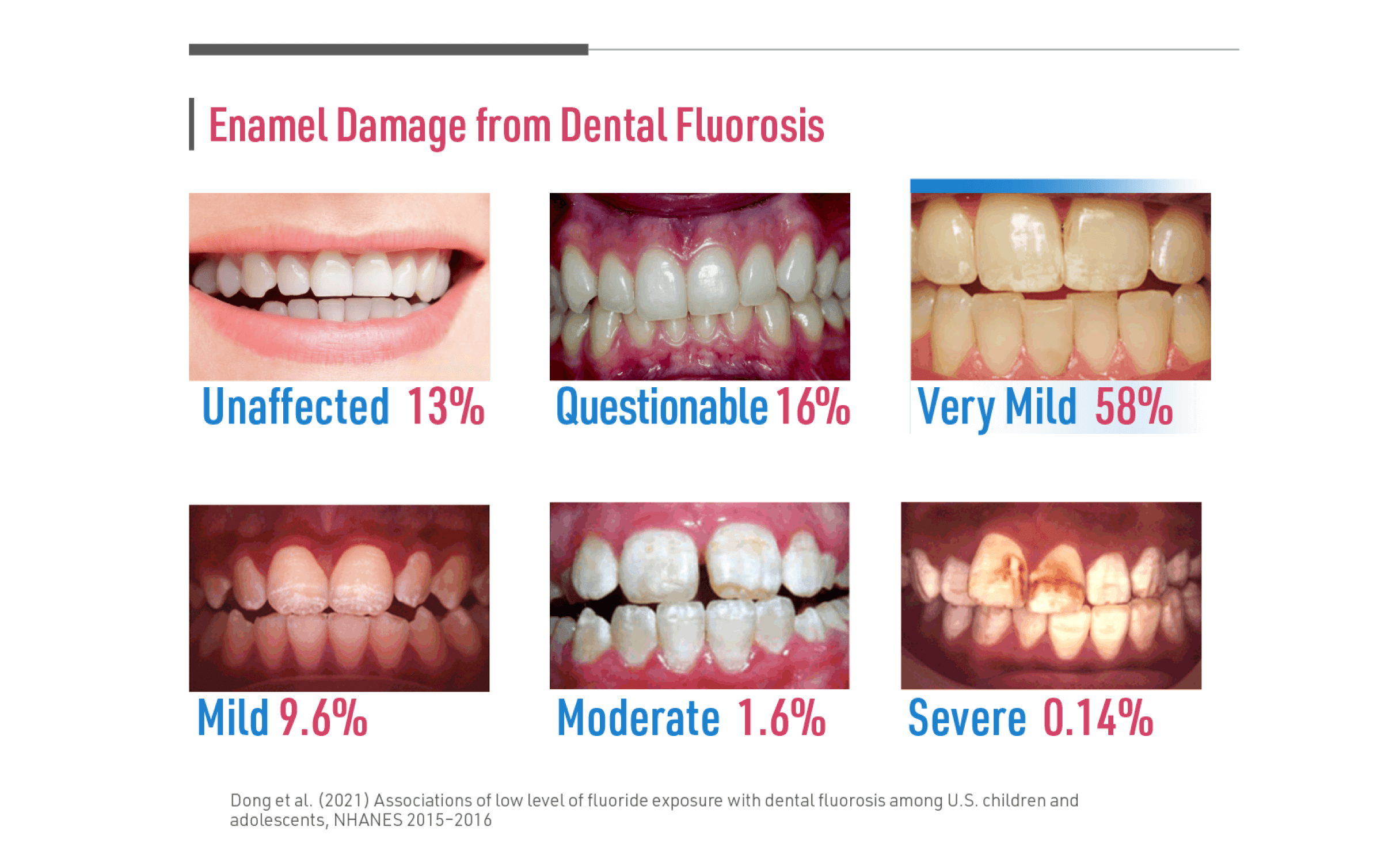
1. Dental Fluorosis: A Recognised Risk of Excessive Fluoride Exposure
One of the best-established risks associated with excessive fluoride intake is dental fluorosis.
Dental fluorosis develops when children consume too much fluoride while their permanent teeth are still forming beneath the gums.
Depending on the severity, the condition can produce:
- White spots, streaks, or patches on the teeth.
- Changes in the appearance of tooth enamel.
- Brown staining in more severe cases.
- Pitting or surface irregularities in severe fluorosis.
The risk is particularly relevant to children younger than eight years because their permanent teeth are still developing.
Children may swallow toothpaste accidentally while brushing, increasing their total fluoride intake. (get puredent kids toothpaste-safe swallow-fluoride free)
Parents and caregivers should therefore supervise young children during brushing and use age-appropriate amounts of toothpaste.
The takeaway: Excessive fluoride intake during childhood can permanently affect the appearance of developing teeth. Appropriate toothpaste use and attention to other fluoride sources can help reduce this risk.
2. Skeletal Fluorosis: What Happens When Fluoride Accumulates in the Body?
Fluoride does not remain exclusively in the mouth. When swallowed, some is absorbed into the bloodstream, and fluoride can accumulate in bones over time.
Prolonged exposure to excessive fluoride levels can cause skeletal fluorosis, a condition that affects bones and joints.
Potential symptoms and effects include:
- Pain in bones and joints.
- Joint stiffness.
- Changes in bone structure.
- Increased bone density.
- In severe cases, impaired mobility and skeletal deformities.
The condition is associated with excessive long-term fluoride exposure, particularly in areas where drinking water contains naturally high fluoride concentrations and daily use of toothpaste that contains fluoride.
The US Agency for Toxic Substances and Disease Registry explains that high fluoride exposure can affect bones and, at sufficiently high levels, make them more brittle.

Puredent Fluoride Free Toothpaste for all age groups
3. Fluoride and the Brain: Why Exposure Levels Matter
Another area of scientific investigation concerns fluoride exposure and children’s neurodevelopment.
In 2024, the US National Toxicology Program published a systematic review of research examining fluoride exposure and cognitive development.
The review concluded, with moderate confidence, that higher fluoride exposure—for example, drinking water containing more than 1.5 milligrams of fluoride per litre—was associated with lower IQ in children.
4. Can Long-Term Fluoride Exposure Cause Cancer?
This is one of the most frequently asked questions about fluoride.
The main cancer concern investigated by researchers has been osteosarcoma, a rare cancer that develops in bones.
The concern arose partly because fluoride can accumulate in bone tissue and because some animal experiments raised questions about a possible relationship between fluoride exposure and bone tumours.
5. Why Total Fluoride Exposure Deserves Attention
Fluoride exposure can come from several sources, not just toothpaste.
These may include:
- Drinking water containing naturally occurring fluoride.
- Fluoridated public water supplies.
- Toothpaste and mouth rinses.
- Professionally applied dental fluoride treatments.
- Certain foods and beverages prepared with fluoridated water.
- Some fluoride-containing supplements.
For most people, the health implications depend on the total amount of fluoride consumed and the circumstances of exposure.
A person who uses toothpaste correctly and spits it out has a different exposure pattern from someone who repeatedly swallows toothpaste or drinks water containing unusually high fluoride concentrations.
This is particularly important for children, who may swallow toothpaste more readily than adults.
Understanding your local drinking-water quality and following appropriate dental-product instructions are practical ways to manage unnecessary exposure.
In areas where groundwater naturally contains elevated fluoride, testing the water can be especially useful.
6. Is Fluoride-Free Toothpaste a Better Choice?
For consumers who prefer to avoid fluoride in their personal-care products, fluoride-free toothpaste offers an alternative.
Some people choose these products because of personal preferences, concerns about cumulative exposure, ingredient sensitivities, or a desire to use products with simpler formulations.
What Should You Look for in Fluoride-Free Toothpaste?
If you are considering a fluoride-free option, examine the product label and look for:
- Clearly identified ingredients.
- Appropriate safety and quality information.
- A formulation intended for regular oral hygiene.
- No unsupported claims that the product prevents or treats diseases.
- Instructions suitable for the intended age group.
A toothpaste should primarily support oral hygiene, and product claims should reflect what the ingredients can reasonably accomplish.